If you take away one thing from this entire blog, let it be this:
Most fence problems in Oklahoma start underground.
Not the panels. Not the pickets. Not even the material choice.
It almost always comes back to how the posts were set.
If you are in Newcastle, Blanchard, or anywhere nearby, you are dealing with a mix of clay soil, heat, and wind. That combination makes post depth one of the most important parts of your entire fence.
So how deep should fence posts actually be here?
The honest answer is this:
There is a general rule, but in Oklahoma, the conditions matter just as much as the rule.
Let’s break it down in a way that actually helps you make the right call.
You will often hear this guideline:
Fence posts should be buried about one third to one half of the height of the fence above ground.
So for a six foot fence, that usually means around two to three feet deep.
That is a solid starting point.
It is even supported by general construction guidance, where posts are often set deep enough to handle both structural load and environmental pressure.
But here is the thing.
That rule works best in stable soil.
Oklahoma is not always stable soil.
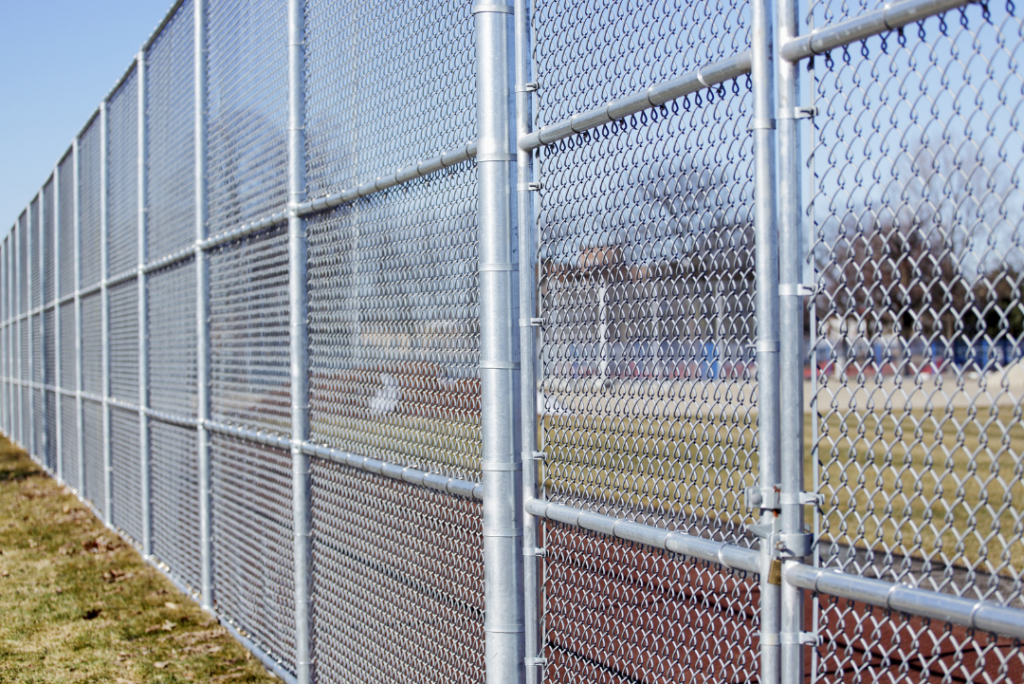
As we talked about in the last blog, clay soil expands when wet and shrinks when dry.
That means the ground around your posts is constantly shifting.
If your posts are not deep enough, they move with it.
That is how fences start leaning.
Oklahoma wind is not just a seasonal thing. It is part of everyday life.
When wind hits a fence, especially a solid privacy fence, it creates pressure on the posts.
The deeper and more secure the posts are, the better they resist that pressure.
For perspective, wind monitoring systems like Oklahoma Mesonet consistently track strong gusts across the region.
That is why depth is not just about holding the fence up. It is about keeping it stable when conditions change.
Water changes everything underground.
If water collects around a post, it softens the soil and increases movement.
Proper depth combined with good drainage reduces that risk.
For most residential fences in Newcastle and surrounding areas, here is a practical breakdown:
About two feet deep is common, but deeper may be used in softer soil.
Around two and a half to three feet deep is typical, with adjustments based on soil and wind exposure.
Posts are often set deeper than standard sections because they carry more weight and movement.
This is where a lot of cheaper installs cut corners, and it usually shows later.
This is where homeowners get tripped up.
Going deeper helps, but depth alone does not solve everything.
What matters just as much is how the post is set.
Loose soil around a post is a problem waiting to happen.
Compacted soil or properly set base material helps lock the post in place.
If water sits around the post, the soil becomes unstable.
Good installation avoids trapping moisture.
Posts that are too far apart put more stress on each section of fence.
That stress adds up when the ground starts shifting.
This applies whether you are installing Vinyl Fencing, Metal Fencing, or traditional wood fencing.
This is one of the most common questions homeowners ask.
Should posts be set in concrete?
The answer is not one size fits all.
Adds strength and weight
Helps anchor posts in place
Common for gates and high load areas
Can trap water if not installed correctly
Can create a rigid base that does not adjust well to soil movement
In clay soil, the goal is not just strength. It is balance.
You want the post to be secure, but also installed in a way that accounts for how the soil behaves.
This is why experience matters more than just the material used.
If posts are too shallow, you will usually see:
• leaning sections within the first year
• fence lines that look uneven
• gates that stop closing properly
• posts that feel loose when pushed
These issues rarely fix themselves.
They usually get worse over time.
A good installer does not just follow a rule. They read the property.
That means looking at:
• soil type
• moisture levels
• slope
• wind exposure
• fence height and style
Then adjusting the depth and installation method accordingly.
Organizations like American Fence Association emphasize that installation practices should match local conditions, not just generic guidelines.
That is the difference between a fence that lasts a couple of seasons and one that stays straight for years.
Not all fences put the same stress on posts.
Catch more wind and need stronger, deeper support.
Allow airflow and may require slightly less reinforcement.
Often cover larger areas and require consistency over long distances.
If you are dealing with acreage, this is where Farm Fencing becomes relevant.
Security and durability are the priority, which usually means deeper and stronger installations.
That is where Commercial Fencing comes into play.
Sometimes yes.
If the issue is isolated, posts can be reset or reinforced.
But if the entire fence was installed too shallow, repairs become more complicated.
In those cases, partial or full replacement may be the better long term solution.
Post depth is the foundation, but maintenance still matters.
For wood fences, sealing helps protect the material from moisture changes that can weaken the structure over time.
That is where Fence Staining and Sealing helps extend the life of your fence.
It does not fix poor installation, but it supports a good one.
You can read ten different articles online and get ten slightly different answers about post depth.
That is because soil and weather conditions are not the same everywhere.
In Oklahoma, environmental factors play a bigger role than most people expect.
State level agencies like Oklahoma Department of Emergency Management often highlight how local conditions impact structures across the state.
Fences are no different.
Before you move forward with a project, ask:
How deep will the posts be set
How is the soil being handled
How will drainage be managed
How are gates being supported
How is wind being accounted for
If those questions are answered clearly, you are on the right track.
It can be for shorter fences, but deeper is often needed for six foot fences or areas with shifting soil and higher wind exposure.
Deeper helps, but only when combined with proper installation and soil handling.
Because depth alone does not prevent movement. Soil conditions, drainage, and installation quality all matter.
Yes. Wind is a major factor in Oklahoma and should always be considered in fence design and installation.
Fence posts are not something you see once the job is done, but they are the most important part of the entire structure.
In Oklahoma, where soil moves and wind is constant, getting the depth right is not optional.
It is the difference between a fence that stays straight and one that slowly shifts out of place.
If you are planning a new fence, take the time to understand how it will be built, not just how it will look.
Explore your options with Vinyl Fencing, Metal Fencing, Farm Fencing, Commercial Fencing, and Fence Staining and Sealing, and make sure the installation is designed for your property, not just a standard template.
Because what happens below the ground is what determines how long your fence stands above it.