If you live in or around Newcastle, OK, you already know our summers are not gentle. The sun is intense, the heat can hang around for weeks, and the wind does its own thing on a random Tuesday. So when someone asks, “Should I do vinyl or wood,” the real question is usually this:
Which one will still look good and stay straight after a few Oklahoma summers?
The honest answer is that both can work. But they work best for different kinds of homeowners. Some people want the warm, classic look of wood and do not mind maintaining it. Others want something they can install and mostly forget about, aside from the occasional rinse.
This guide will help you decide, using the real factors that matter here: heat, UV exposure, wind, soil movement, maintenance, and long term cost.
In summer, the UV index often hits the “high” category, which is strong enough that protection is recommended for people spending time outdoors. That tells you something about what your fence is dealing with too.
Wood to dry out, crack, and fade if it is not protected
Vinyl to expand and contract, and lower quality vinyl can become more brittle over time in extreme temperature swings
The good news is that both materials have solutions, but the solutions look different.
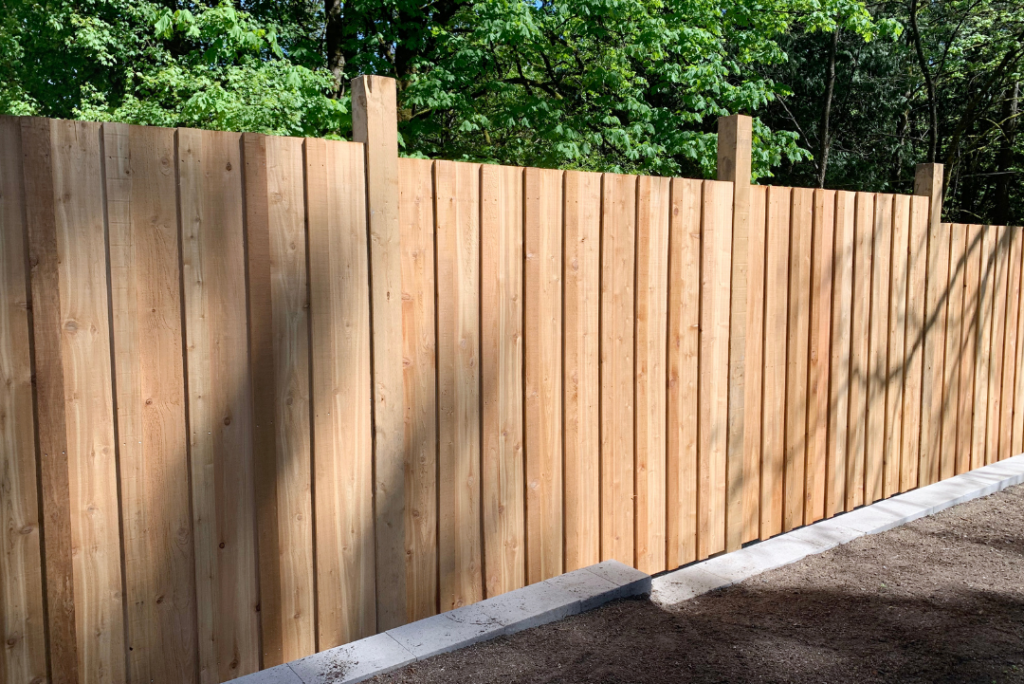
A natural look you cannot fully fake with plastic
More customization options for pickets, trim, and stain color
Easier board by board repairs when something gets damaged
Very low ongoing maintenance
Consistent color and a clean look year round
A fence that stays looking “finished” without staining every few years
Now let’s get into what actually matters in Newcastle and nearby areas.
Wood is often cheaper upfront, especially for standard pressure treated styles. Vinyl usually comes in higher on the first quote.
But long term cost is where homeowners either feel really smart, or feel like they got surprised.
With wood, you are paying for maintenance in either money or time. Most reputable guidance you will find lands on a similar rhythm: staining every two to three years is a common recommendation, with the exact timing depending on sun exposure and weather.
That does not mean you are staining constantly. It means you are planning for it. If you ignore it, wood tends to show it fast in full sun.
If you want a fence that ages gracefully, this is where your internal link makes sense:
If you go with wood, plan ahead for Fence Staining and Sealing so the fence stays protected and you avoid early warping and rot.
Vinyl usually means you are not budgeting for stain, paint, or sealing. Most of the upkeep is cleaning and occasional checks for damage.
If you are the type of homeowner who wants the yard to look good without adding another weekend project, vinyl is hard to beat.
This is a natural internal link to Vinyl Fencing for people who want the low maintenance route.
Wood can handle heat, but heat pulls moisture out of it. That is when you see:
Drying and shrinking
Cracking along the grain
Fading on sun facing sides
A properly stained fence holds up much better, because stain helps manage UV exposure and moisture movement. Sherwin Williams specifically notes that climate and sun exposure can change how often you need to re stain, with a common recommendation around every two to three years.
If your fence is in full sun most of the day, you should treat maintenance like part of the project, not an optional extra.
Vinyl does not rot, and it is not attractive to insects in the way wood can be. Heat and sun do not usually destroy it the way they can untreated wood, but vinyl does expand and contract with temperature changes.
Two real world notes:
Quality matters. Cheap vinyl can become brittle sooner.
Color matters. Darker colors absorb more heat than white.
If you are getting quotes, ask what grade and thickness the vinyl is, not just “vinyl is vinyl.” It is not.
Wind is one of the most overlooked factors when people pick a fence style.
If you want proof that wind is not a rare event here, Oklahoma Mesonet tracks wind speed and direction statewide.
Here is the practical takeaway:
A solid privacy fence catches wind like a wall.
A more open fence lets wind pass through.
Wood fences can do great in wind if they are built right. Where wood can struggle is when the fence is built too lightly, posts are not deep enough, or rails are not braced properly.
The fix is not “avoid wood.” The fix is “build it to match the conditions.”
Vinyl panels can be very sturdy, but wind performance depends heavily on the internal structure and post installation.
If you are in a windier area, or you have a long straight run with full privacy panels, you want an installer who knows when to reinforce and how to set posts properly.
If your property is more exposed, consider asking about a style that reduces wind load, or mixing styles depending on the side of the yard.
This is where both Metal Fencing and Commercial Fencing can also be great internal links, because some homeowners want security and wind friendliness without full privacy panels everywhere.
Homeowners around here are not imagining it when they see fences lean after rain or after a long dry stretch. Soil movement is real, and it affects both vinyl and wood because both rely on the same thing for stability: posts.
If you have shifting soil, a fence that looks perfect on install day can start drifting if the posts were not set correctly.
So when you compare quotes, do not just compare material. Compare what they are doing with the posts.
If someone quotes you a price that seems too good to be true, the shortcut is often underground.
Wood is forgiving. If a few pickets get damaged, you can often replace boards without touching the whole fence. You can also sand, re stain, or change the look over time.
That is a big reason some homeowners still love wood.
Vinyl repairs depend on the system. Sometimes a panel can be replaced cleanly. Other times, the repair is more involved because the panels lock together.
Vinyl is still repairable, but it is not always a quick single board swap like wood.
This part is personal.
Wood has a warm, natural feel. It looks like a home fence. It photographs well. If you are the type of person who likes real materials and does not mind upkeep, wood just feels right.
Vinyl looks crisp and consistent. It stays bright. It tends to look “finished” for a long time. If you want a clean look that stays the same year after year, vinyl wins that category.
If you are deciding purely on curb appeal, drive around your neighborhood and look at fences that are five to ten years old. Do not look at the new ones. The older ones tell the truth.
Cleaning it when it gets dusty or mildewy
Staining every two to three years in many cases, especially in heavier sun exposure
Replacing a board here and there over time
If that sounds fine, wood can be a great value and a great look.
Rinsing it off occasionally
Wiping or lightly washing stubborn spots
Inspecting after storms to make sure everything is still snug
If you want minimal maintenance, vinyl is usually the calmer choice.
Here is the practical recommendation I give most homeowners.
Vinyl is usually better if
You want low maintenance
You have a busy schedule and do not want another routine project
You want a consistent look for years
You are okay paying more upfront to avoid regular staining
Start here: Vinyl Fencing
You love the natural look
You want more customization
You are comfortable staining and sealing on a schedule
You like the idea of simple board level repairs
Start here: Fence Staining and Sealing and choose a wood style that matches your privacy goals.
Consider styles and materials that handle wind load better, or mix styles by side of yard. Solid privacy everywhere is not always the smartest move in Oklahoma wind.
Start here: Metal Fencing or Commercial Fencing depending on the property.
A lot of rural properties around the Newcastle and Blanchard area are not looking for “backyard privacy.” They are looking for function.
Start here: Farm Fencing
Choose vinyl if you answer yes to most of these:
Do I want very low upkeep
Do I want the fence to keep a consistent look
Do I prefer cleaning over staining
Am I okay with a higher initial investment
Choose wood if you answer yes to most of these:
Do I want a natural look and feel
Do I want more color and design flexibility
Am I willing to stain every few years to keep it protected
Do I like easy board by board repairs
It can, especially on surfaces that get full sun most of the day. UV levels in summer commonly reach categories where protection is recommended, which is a good proxy for how intense sun exposure can be.
A common recommendation is every two to three years, with adjustments for climate, sun exposure, and the type of stain.
Picking based only on the material and not considering wind, soil, and post setting. Oklahoma Mesonet wind data is a good reminder that wind is a constant design factor here.
If you want the simplest ownership experience, vinyl is usually the winner. If you want the most natural look and do not mind maintaining it, wood can be a beautiful choice that holds up well when it is protected and built correctly.
Either way, the fence that lasts is the one that is designed for Oklahoma conditions, not a generic template.
If you want help choosing for your specific property, start by looking through Vinyl Fencing, Metal Fencing, Farm Fencing, Commercial Fencing, and Fence Staining and Sealing, then get a quote that includes post setting details and wind considerations.