If you own a wood fence in Oklahoma, you’ve probably heard the advice before.
“You need to stain it.”
Then someone else says:
“No, you need to seal it.”
Before long, it sounds like everyone has a different opinion.
The truth is that both staining and sealing can help protect a wood fence. The confusion comes from the fact that many homeowners assume they are the same thing.
They are not.
Understanding the difference can help you make a better decision for your property, your budget, and the long term health of your fence.
In places like Newcastle, Blanchard, and surrounding Oklahoma communities, weather conditions can be especially hard on wood fencing. Intense sunlight, heavy rain, strong winds, and constant temperature changes all work against your fence year after year.
Let’s break down what staining and sealing actually do and which option makes the most sense for Oklahoma homeowners.
Wood is a natural material.
That is one of the reasons people love it.
It looks warm, inviting, and fits almost any property style.
The challenge is that wood constantly reacts to its environment.
When wood absorbs moisture, it expands.
When it dries, it contracts.
After years of repeating this cycle, cracks begin to form, boards can warp, and structural issues become more common.
At the same time, ultraviolet rays from the sun slowly break down wood fibers, causing fading, discoloration, and surface deterioration.
Without protection, even a quality fence can age much faster than expected.
That is why some type of protective treatment is one of the smartest investments a homeowner can make.
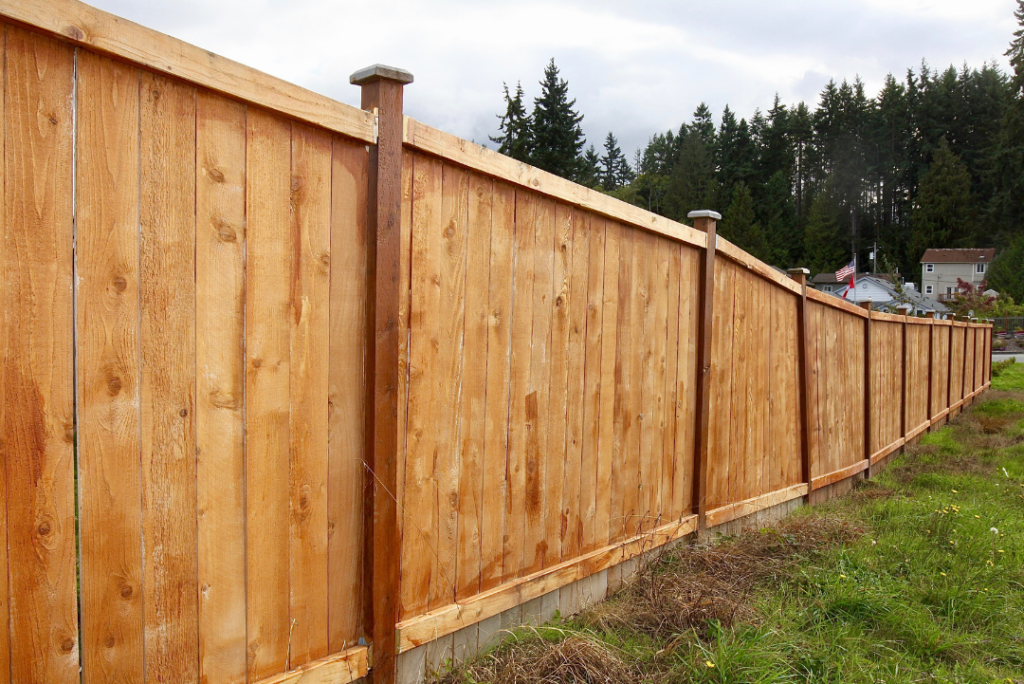
A sealer is designed primarily to create a protective barrier against moisture.
Think of it as a shield that helps reduce water absorption.
When rain hits a sealed fence, water is more likely to bead on the surface rather than soak into the wood.
Benefits of sealers include:
• moisture protection
• reduced swelling and shrinking
• protection against rain damage
• improved resistance to mildew and mold
Many sealers are clear or nearly transparent.
They are designed to protect the wood while preserving its natural appearance.
For homeowners who love the original look of cedar or other wood species, a sealer can be appealing.
A stain also provides protection, but it does more than simply block moisture.
Quality stains penetrate the wood and provide:
• moisture protection
• ultraviolet protection
• color enhancement
• longer lasting appearance
Unlike clear sealers, stains contain pigments that help shield the wood from sunlight.
This becomes extremely important in Oklahoma where summer sun can be relentless.
Because stain penetrates into the wood rather than simply sitting on the surface, many homeowners find it offers more comprehensive protection over time.
If there is one thing to remember, it is this:
A sealer primarily protects against moisture.
A stain protects against moisture and sunlight.
That difference matters.
Many fence failures begin with moisture problems.
Many appearance problems begin with sun exposure.
In Oklahoma, homeowners deal with both.
That is why staining is often the preferred choice for long term fence protection.
Not every climate is the same.
A product that performs well in one state may not perform as well in another.
Oklahoma presents several unique challenges.
The Oklahoma sun can be brutal on exterior wood.
According to the National Weather Service, Oklahoma regularly experiences long periods of intense summer heat and sunshine that accelerate weathering on outdoor surfaces. National Weather Service
Over time, ultraviolet exposure can cause:
• fading
• discoloration
• drying
• surface cracking
Because sealers generally provide little UV protection, stained fences often maintain their appearance longer.
Spring storms are common across Oklahoma.
Repeated wet and dry cycles place stress on wood.
Both stain and sealer help reduce moisture absorption, which helps limit damage caused by these cycles.
Strong Oklahoma winds can gradually wear down exterior surfaces.
Dust and debris carried by wind create additional wear over time.
Properly protected wood stands up much better to these conditions.
There are situations where a sealer makes sense.
Some homeowners prefer the natural appearance of wood and do not want any added color.
A quality clear sealer can help preserve that look while offering moisture protection.
A sealer may also work well for:
• newer cedar fences
• decorative fencing
• homeowners seeking a natural wood appearance
The tradeoff is that you may need more frequent maintenance compared to stained wood.
For most Oklahoma homeowners, stain provides broader protection.
It helps address the two biggest threats to wood fences:
• moisture
• ultraviolet exposure
Stain is especially valuable for fences that receive:
• full sun exposure
• western exposure
• limited shade
• heavy weather exposure
The added UV protection often helps preserve both appearance and structural integrity.
This is one reason many professional fence companies recommend staining as part of long term maintenance.
Many modern products combine stain and sealer in one application.
These products are often marketed as stain and seal systems.
They provide:
• color enhancement
• moisture resistance
• UV protection
For many homeowners, these products offer the best of both worlds.
However, product quality matters significantly.
Choosing the right product is often just as important as deciding between staining and sealing.
Maintenance schedules vary depending on:
• sun exposure
• wood species
• product quality
• weather conditions
Generally speaking, most Oklahoma wood fences benefit from maintenance every few years.
The key is not waiting until the fence looks severely weathered.
Signs that protection may be wearing off include:
• fading color
• dry appearance
• rough texture
• water soaking into the wood
Addressing these signs early can extend the life of the fence considerably.
Many homeowners focus entirely on the product.
Preparation is just as important.
Before applying stain or sealer, the fence should be:
• cleaned thoroughly
• free of dirt and debris
• completely dry
• inspected for damage
Applying protection over dirty or wet wood often leads to disappointing results.
Proper preparation helps ensure maximum absorption and performance.
In many cases, yes.
A well maintained wood fence can often last significantly longer than a neglected one.
Regular Fence Staining and Sealing helps reduce exposure to the elements and slows the deterioration process.
While no treatment can make a fence last forever, proper maintenance can dramatically improve longevity.
One reason some homeowners explore Vinyl Fencing or Metal Fencing is the reduced maintenance.
Vinyl does not require staining.
Metal fencing generally requires less routine upkeep than wood.
However, many homeowners still prefer the appearance and character of natural wood.
For those homeowners, proper protection is essential.
Likewise, larger properties with Farm Fencing may require different maintenance approaches depending on materials and usage.
One of the biggest mistakes is waiting too long.
Many people assume their fence is fine because it still looks structurally sound.
Unfortunately, damage often starts long before major issues become visible.
Other common mistakes include:
• choosing products based solely on price
• skipping preparation steps
• applying products during poor weather conditions
• neglecting routine inspections
A little maintenance today often prevents costly repairs later.
For most Oklahoma homeowners, stain provides broader protection because it helps guard against both moisture and ultraviolet damage.
In some situations, yes. However, compatibility depends on the products being used and manufacturer recommendations.
Lifespan varies based on exposure and product quality, but many fences benefit from maintenance every few years.
Clear sealers generally provide limited UV protection compared to stains, which is why fading can still occur.
For most wood fences, regular staining helps preserve appearance, reduce weather damage, and extend lifespan.
When it comes to protecting a wood fence in Oklahoma, both stain and sealer have value.
The real difference is in the level of protection they provide.
A sealer focuses primarily on moisture resistance.
A stain helps protect against moisture while also defending the wood from damaging ultraviolet rays.
Because Oklahoma homeowners deal with intense sunlight, storms, wind, and changing weather throughout the year, stain is often the more complete solution for long term fence protection.
Whether you are maintaining an existing fence, considering Fence Staining and Sealing, exploring Vinyl Fencing, looking at Metal Fencing, or planning a new Farm Fencing project, protecting your investment today can help you avoid expensive repairs tomorrow.
A little prevention goes a long way when Oklahoma weather is involved.