If you’ve lived in Newcastle, Blanchard, or anywhere around this part of Oklahoma for even a short time, you already know one thing:
Wind is not an occasional problem. It is part of everyday life.
Some days it’s just a steady breeze. Other days, it’s strong enough to move patio furniture, slam gates, and test anything that is not built right.
So when homeowners ask, “What’s the best fence for wind?” they’re really asking:
What kind of fence is not going to end up leaning, rattling, or falling apart after a few storms?
The answer is not just about the material. It is about how the fence is designed, how it is installed, and how it interacts with wind in the first place.
Let’s break it down in a real, practical way.
Before we talk about the best options, it helps to understand what wind actually does to a fence.
When wind hits a fence, it creates pressure.
A solid fence acts like a wall. The wind has nowhere to go, so it pushes directly against the structure.
An open fence allows air to pass through, which reduces pressure.
That is the key difference that drives almost every decision.
For context, wind monitoring systems like Oklahoma Mesonet track wind speeds across the state daily, showing just how common strong gusts are in this region.
That is why choosing the right fence for wind is not optional here. It is part of building something that lasts.
If wind is your biggest concern, open style fencing is usually the safest choice.
This includes:
• aluminum fencing
• wrought iron style fencing
• certain types of Metal Fencing
Because these fences allow air to pass through, they do not take on as much pressure.
That means:
• less stress on posts
• less risk of leaning
• longer overall lifespan
These are especially common for homeowners who want durability and do not need full privacy.
Chain link is one of the most wind friendly options out there.
It is not always chosen for looks, but it performs extremely well in high wind areas.
Why it works:
• open design reduces wind resistance
• flexible structure absorbs movement
• typically requires less reinforcement than solid fences
For larger properties or practical applications, this ties directly into Commercial Fencing and Farm Fencing.
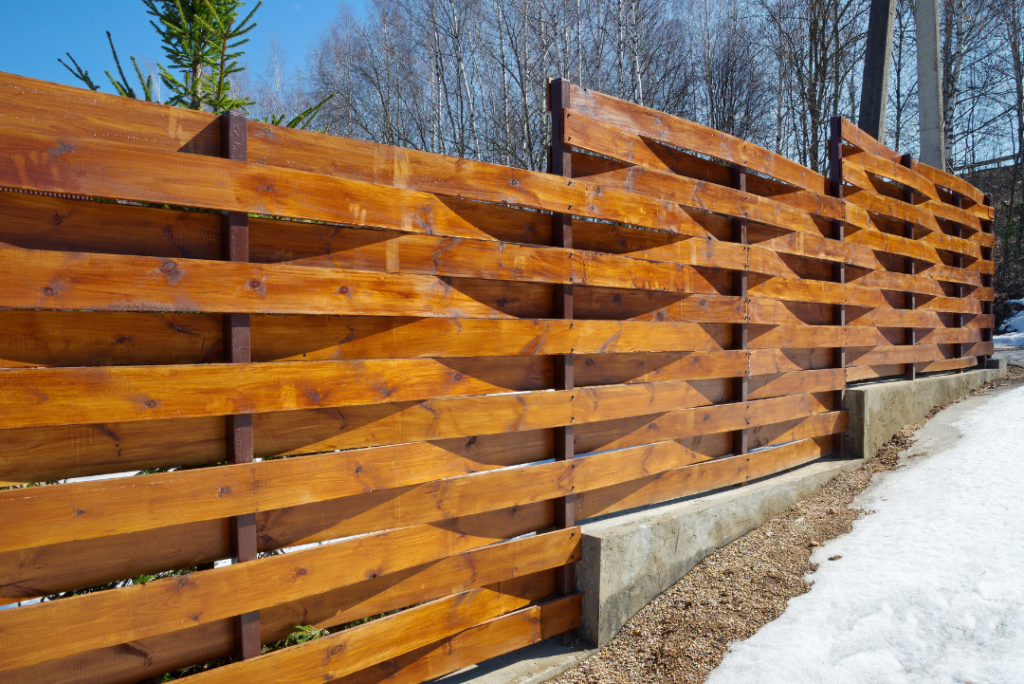
If you want some privacy but still want to manage wind pressure, semi private wood fencing is a strong option.
Instead of solid panels, these designs include small gaps between boards.
That allows airflow while still providing coverage.
This is a great middle ground for homeowners who want:
• privacy
• airflow
• better wind performance than solid panels
Vinyl can work in high wind areas, but it has to be installed correctly.
The material itself is strong, but solid vinyl panels can catch wind just like wood.
So what makes the difference?
• post depth
• internal reinforcement
• spacing
• layout
If vinyl is installed with wind in mind, it can hold up very well.
This is where Vinyl Fencing becomes a great option for homeowners who want low maintenance without sacrificing durability.
This is the most common issue.
A fully solid fence with no gaps acts like a sail.
When wind hits it:
• pressure builds
• posts take the full force
• weak points start to move
This is often why homeowners see sections leaning after storms.
It is not that privacy fences are bad. It is that they need to be built correctly for the conditions.
Material matters, but installation matters more.
Here is what professionals focus on.
Posts need to be deep enough to resist movement.
A common guideline is about one third to one half of the fence height, but in windy areas, installers often go deeper.
We covered this in detail in the previous blog, but it is worth repeating because it is that important.
Posts should be:
• properly compacted
• securely anchored
• installed with drainage in mind
Weak posts are the first point of failure in wind.
Posts that are too far apart allow more flex in the fence.
Closer spacing creates a stronger overall structure.
This includes:
• adding airflow when possible
• reinforcing high stress areas
• adjusting layout based on exposure
Organizations like American Fence Association emphasize that installation practices should match environmental conditions, not just follow a standard template.
Not every yard experiences wind the same way.
Some properties are:
• more exposed
• on open land
• facing prevailing wind directions
Others are protected by:
• trees
• buildings
• elevation changes
A good fence design takes this into account.
For example:
A backyard shielded by structures may handle a solid fence just fine
An open property may benefit from a more airflow friendly design
This is where things get interesting in Oklahoma.
Wind pushes the fence.
Clay soil shifts the posts.
Together, they create the perfect conditions for leaning fences.
That is why installation quality matters so much here.
If posts are not deep and secure, wind and soil movement will find that weakness.
Even a well built fence needs attention.
For wood fences:
• sealing helps protect against moisture
• prevents weakening over time
That is where Fence Staining and Sealing becomes important.
It is not just cosmetic. It helps maintain structural integrity.
If you want the simplest answer:
Best overall for wind resistance
Open style metal fencing or chain link
Best balance of privacy and durability
Semi private wood fencing
Best low maintenance option
Vinyl fencing with proper installation
The right choice depends on your priorities, not just the material.
Sometimes yes.
If the issue is isolated, posts can be reset or reinforced.
But if the entire fence was installed too shallow, repairs become more complicated.
In those cases, partial or full replacement may be the better long term solution.
Choosing a fence based only on appearance
Ignoring wind exposure
Going with the cheapest quote without understanding installation details
Skipping reinforcement for privacy fences
These are the things that usually lead to problems later.
Open style fences like metal or chain link because they allow air to pass through.
Yes, but they need proper installation, deeper posts, and sometimes design adjustments to reduce pressure.
Yes, when installed correctly with proper reinforcement and post depth.
Because wind pressure combined with poor installation or shallow posts causes movement.
Wind is part of life in Oklahoma. It is not something you design around once and forget.
The best fence for this area is not just about what looks good today.
It is about what will still be standing straight after strong winds, changing seasons, and shifting soil.
If you are planning a new fence, take the time to choose the right design and the right installation approach.
Explore options like Vinyl Fencing, Metal Fencing, Farm Fencing, and Commercial Fencing, and make sure the structure is built for the conditions your property actually faces.
Because when it comes to fences in Oklahoma, strength is not just about the material.
It is about how everything works together.